
I Found the Magic on YouTube
- Leslie Martin
- Aug 30, 2025
- 2 min read
If you had a magic wand, what would you do?
I heard somewhere earlier this year that to grow as an artist you should ask yourself this question and then go in the direction of your answer.
My problem at the time, and for at least the last six months, was that I didn’t know the answer to that question.
What I did know was that I was dissatisfied with my artistic output.
Why I felt that way was an absolute mystery to me. I kept trying to figure out why I thought my work was boring. I complained to my husband, I complained to my art friends. But they just shrugged and said, “It looks fine to me.”
So I kept on, sometimes feeling good about pieces and other times feeling flat. It was so frustrating not understanding what was wrong. Honestly, it's why I haven’t posted anything on this blog during the last six months. I’ve been feeling lost and that’s hard to write about.
But last month, everything changed.
I found my answer.
Well, technically, the YouTube algorithm found it for me. Sitting on my YouTube home page one day was Chelsey Lang’s video about “One Change” that leveled up her art and won her an OPA gold medal. While that sounded like clickbait to me, I watched it anyway, and I am so glad that I did.

I’m not going to steal her glory, so go watch her video for all the details, but I will say that she advises making a vision board. Once I went through her process and looked at my board, it became clear to me why I thought my art was boring - I’m not painting what brings my heart joy. I thought I was, but I soooooo wasn’t.
When I started painting more seriously almost two years ago, I found that what I wanted to paint was a mix of landscape/ nature and buildings/ figures. I particularly love it when nature dwarfs the human elements. So that’s what I’ve been painting. But it turns out that isn’t all I want.

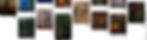
Looking at the vision board, it is abundantly clear that what I want is a stronger sense of mood brought on by particular lighting conditions. Achieving this involves very intentional color palette choices. As you look at the spread of thumbnail images, you can see how cohesive each square is color-wise. I feel like there’s a name for that, but I honestly don’t know what it is. The task for me now is to figure out what guides those color choices. How can I learn what colors to put where?
And, ya’ll, I am so excited to get started on this journey. I’ll be chronicling it here should you want to follow along. The first stop will be working through the book "Color Relativity" by Kami Mendlik. So stay tuned...